

Common retention challenges in e-commerce, such as high cart abandonment rates, lack of brand differentiation, and price-driven competition, can be strategically addressed through structured incentive programs. However, implementing these programs manually or through basic tools is technically unfeasible for growing enterprises. This is where the top Magento 2 extensions for loyalty & rewards programs come into play. These specialized tools automate the complex logic of earning points, managing tiers, and triggering behavioral notifications, allowing merchants to scale their retention efforts without increasing administrative overhead.
This guide provides an in-depth analysis of the essential loyalty extension categories available for Magento 2. It is designed for store owners, digital marketers, and e-commerce teams who need to understand how to leverage specialized software to increase customer lifetime value (CLV) and build a resilient revenue foundation in a highly competitive market.
The primary objective of a loyalty program is to alter buyer behavior in a way that benefits the merchant’s bottom line while providing perceived value to the customer. Without the right technical infrastructure, these programs often fail to gain traction or become administrative burdens.
Implementing a structured rewards system leads to a significant increase in repeat purchase rates. When a customer knows they are accumulating value with every transaction, the psychological “switching cost” to a competitor increases. Over time, this behavior results in a much higher customer lifetime value (CLV). Beyond financial metrics, loyalty programs foster better customer engagement; they provide a reason for users to log in, interact with marketing emails, and participate in social sharing, keeping the brand at the forefront of the consumer’s mind throughout the buying cycle.
While Adobe Commerce (formerly Magento Commerce) includes a basic reward points system, it is often insufficient for enterprise-level needs. Magento Open Source lacks any native loyalty functionality entirely. The native reward points in Adobe Commerce are limited by a lack of tiered logic, restrictive expiration rules, and a basic user interface that does not support modern gamification or referral tracking. Furthermore, native features lack the granular segmentation required to offer different reward structures to different customer groups, such as wholesalers versus retail buyers.
Third-party extensions bridge these functional gaps by introducing advanced segmentation and behavioral triggers. They allow merchants to offer different reward rates based on specific customer attributes, past purchase history, or category-level performance. By utilizing the top Magento 2 extensions for loyalty & rewards programs, businesses can move away from generic “one point per dollar” schemes and toward sophisticated, data-driven retention strategies that resonate with individual buyer motivations and professional procurement needs.

The market for Magento enhancements is vast, but the most effective solutions generally fall into five distinct functional categories that address different stages of the customer lifecycle.
The points-based model remains the foundation of most e-commerce loyalty strategies due to its simplicity and high adoption rate. This type of extension allows customers to earn digital currency for various actions, ranging from placing an order to writing a product review or subscribing to a newsletter.
To achieve professional-level results, merchants often implement a specialized Magento 2 reward points solution that provides automated earning rules and flexible spending thresholds. A critical technical feature of these extensions is their support for “Hole Punching” or ESI (Edge Side Includes). Since point balances are dynamic and specific to each user, they must be excluded from the site’s Full Page Cache (FPC) to ensure that a customer always sees their accurate, real-time balance without sacrificing the site’s loading speed.
Gamification involves applying game-design elements to the shopping journey to drive engagement through psychological triggers like competition, achievement, and status. This moves the loyalty program from a purely transactional “spend-get” model to an experience-based model.
Referral marketing leverages the existing trust between your customers and their peers to acquire new leads at a fraction of the cost of traditional paid media. In the Magento ecosystem, this extension acts as a tracking engine for word-of-mouth growth.
Tiered programs focus on segmenting the customer base into ranks (e.g., Bronze, Silver, Gold, Diamond) based on their historical spend or engagement frequency. This structure allows merchants to provide a “premium” experience to their most profitable customers.
Store credit transforms the concept of a refund or a reward into a “Digital Wallet” housed within the customer’s account. It is one of the most versatile financial tools available in the Magento marketplace.

The implementation of the top Magento 2 extensions for loyalty & rewards programs is not just a marketing tactic; it is a technical optimization of the sales funnel that yields measurable business results.
The most direct correlation is found in the repeat purchase rate. By reminding customers of their “unused balance” or “upcoming tier expiration,” extensions drive traffic back to the site without additional advertising spend. This creates a self-sustaining cycle where every purchase increases the probability of the next.
Loyalty programs are powerful tools for increasing AOV. Tactics such as “Earn double points on orders over $200” or “Reach the Gold Tier with this purchase” nudge customers to add more items to their carts. Psychologically, customers are more willing to spend a little more if they perceive they are gaining a significant long-term benefit or moving closer to a milestone.
True brand loyalty occurs when a customer stops comparing prices and begins prioritizing the experience and cumulative rewards of your store. Extensions facilitate this by creating a “walled garden” where the value of staying with your brand exceeds the perceived savings of moving to a competitor.
Choosing between various top Magento 2 extensions for loyalty & rewards programs requires a strategic evaluation of your specific business needs and technical constraints.
B2C stores should focus on emotional engagement, gamification, and fast-moving points. B2B stores, however, require extensions that support “Account-level” rewards, where the points belong to the company entity rather than the individual employee placing the order. The extension must also respect Magento’s “Shared Catalog” and “Tier Pricing” logic to avoid price conflicts.
A store with low-frequency, high-ticket items (like industrial machinery) should prioritize referral and VIP tiers over a simple points system. A high-frequency store (like an office supply wholesaler) will see the best results from a robust cashback or points-per-dollar model that rewards consistent volume.
Extensions range from simple one-time purchases to complex SaaS-integrated solutions with monthly fees. Merchants must consider the total cost of ownership (TCO), including the developer hours required for styling and configuration. Compatibility with modern frontends like Hyvä or PWA Studio is also a critical technical requirement in 2026 to ensure the loyalty UI is as fast as the rest of the site.
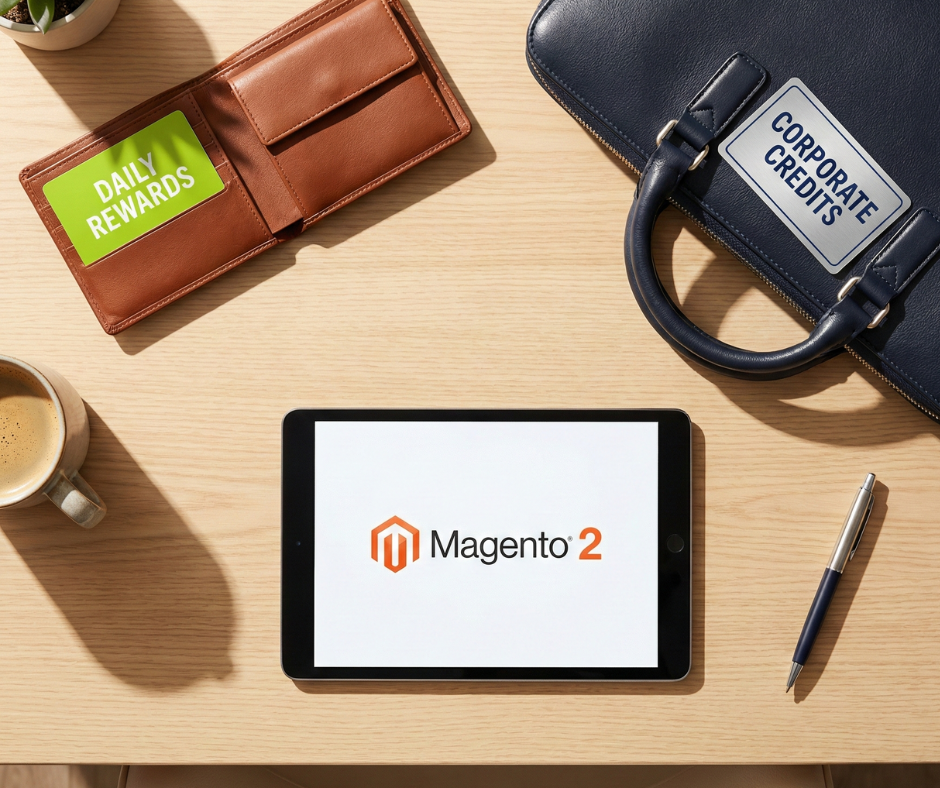
The mechanics of loyalty must be tuned to the specific psychology of the target audience to be effective.
B2C buyers are motivated by discounts, status, and instant gratification. B2B buyers are motivated by operational efficiency, contract compliance, and long-term cost reduction. A B2B buyer is unlikely to care about a “badge,” but they will highly value a reward that translates into a 5% discount on their next bulk shipment or a “priority support” perk.
For B2C, the focus is on the individual. Social sharing, birthday points, and visual progress bars work best. For B2B, the focus is on the organization. Rewards should focus on bulk-purchase incentives, net-term extensions, or dedicated account management.
Top Magento 2 extensions for loyalty & rewards programs are no longer optional extras; they are foundational pillars of a modern e-commerce architecture designed for scale. Loyalty extensions should be viewed as a long-term growth investment. While the initial setup requires careful planning and a modest budget, the resulting increase in CLV and decrease in dependency on paid media provide an unmatched ROI. To succeed, merchants must ensure their rewards are perfectly aligned with their business goals—whether that is clearing old inventory through point boosters or expanding into new markets through referral programs.
The most successful Magento stores are those that treat their customers not as transactions, but as members of a community. By choosing the right specialized tools to reward and recognize your buyers, you transform your storefront from a simple catalog into a high-performance growth engine that scales alongside your business ambition.
